
Introduction
Updated: Aug 21

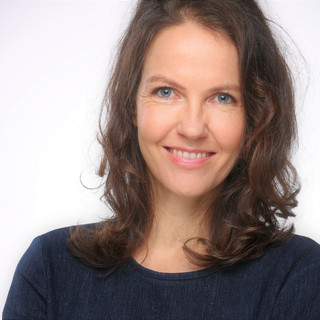
I'm writing a book. For you, dear mother! I'd like to share the Introduction with you. I hope you'll get inspired to take good care of yourself, at every level. I'm curious if you'll buy the book. And if you have any wishes you'd like to read about, let me know!
The Way Home
This book is for all parents who have lost themselves, or the connection to their own lives, along the way in the hope of saving their child. For all parents who feel held hostage by the extreme behavior associated with their child’s eating disorder. Parents ruled by fear, grief, or anger, whose trust in their child, in themselves, or in a positive outcome is steadily diminishing. In short, for parents who can no longer cope and are wondering whether there is another exit. Whether there is another way to relate to themselves, their child, and the situation.
There is. It is the exit back “home,” back to yourself. Because the only place where lasting inner peace and trust can be found is within ourselves. Trust that you can handle this, trust that nothing stays as it is now, trust that there is always hope, and trust in life itself.
Trust: the deep experience of inner calm that enables and empowers us to make valuable, loving choices, even in times of profound disruption. Instead of being at the mercy of our own automatic behavior or that of our child.
When your child is trapped in an eating disorder and you take on, or are given, an important role in her recovery,[1] you may feel as though you are running an endless marathon. But not only that: you are running it on two broken feet. Running a marathon on broken feet, that’s impossible, you might think. But it is possible. When the danger is huge enough. That is how our brain and nervous system are designed. Even when we are severely injured, we can survive by fighting or fleeing. The wound is real, but we do not feel it. And on top of that, when we are in danger, there is no space to stop and attend to the wound, care for it, and allow it to heal.
In your case, you are not physically injured, but emotionally injured. When your child has an eating disorder, and you see her losing her grip, the eating disorder becoming stronger and stronger, the connection with your child changing, when you see her hurting herself, your heart breaks.
Physical pain and emotional pain are created in the same area of our brain[ i ] in order to protect us. When the danger has passed and we are safe, both physical and emotional pain cause us to withdraw, or instead to seek safe connection and help, and to rest and “lick our wounds”. Allowing our natural capacity for self-healing to do its work. If our brain decides that we are not yet safe, that there is ongoing danger, it enables us to keep going, so that we do not feel how wounded we are. This means that our wounds, in this case our emotional wounds, do not receive the care they need, nor the rest or attention. We can keep going even though we are wounded. But we do not recover.
If the situation continues, this becomes a form of self-depletion. We run the risk of ending up in a downward spiral, just like our child. A downward spiral that takes us further and further away from “home,” away from ourselves, from our capacity and resilience. Even though we need those things more than ever.
In current mainstream eating-disorder treatment, there is not yet a clearly established place for the emotional healing process of the parents themselves. In treatments such as Family-Based Treatment[ ii ] and Multi-Family Day Treatment,[ iii ] parents learn how they can contribute to their child’s recovery, but there is little attention paid to the parents’ own emotional recovery and capacity to cope.
The role you take on as a parent, and the tasks that come with it, are incredibly demanding. Even if you were feeling completely well yourself. As a parent, you have to deal with the emotional manipulation that often accompanies an eating disorder, support six meals a day that are often extremely difficult, set boundaries that may lead to intense outbursts from your child, regulate your child’s intense emotions, and deal with all kinds of coercion, self-harm, and/or suicidality. And all of this while standing on the foundation of your own emotional wounds and dysregulation.
If we compare an eating disorder with a serious physical illness, imagine, for example, that your child is diagnosed with cancer, also a potentially fatal disease. Your heart would be broken too. The difference is that everyone, from family and friends to doctors and treatment professionals, is constantly aware of that. And because of that awareness, they are gentle with parents, supportive and caring. When your child has an eating disorder, you become part of the treatment. In fact, you are told that your efforts are necessary for the treatment and recovery to succeed. Imagine if parents were told that the success of chemotherapy depended on their efforts. How do you think they would feel? What would it do to their capacity to cope? Everyone would understand that you cannot ask that of parents in such a situation. Yet when your child has an eating disorder, that is exactly what is being asked of you.
That is why I wrote this book. As a guide and something to hold on to. As a lifeline during the eating disorder, but also afterwards. Because even when your child has recovered, you probably have not. Only then does there begin to be space for you to heal sustainably as well.
Because what happens?
It is incredibly difficult: our child is trapped in an eating disorder, and we become trapped in being preoccupied with our child, both literally and figuratively. This is called codependency. Our child is dependent on the eating disorder, and over time we become dependent on being preoccupied with our child. Our child is ill, and we begin to think, feel, and behave in unhealthy ways too. We lose our clarity and our own space and strength, our own life, and we lose our connection with ourselves.
If we are not careful, we place our mental, emotional, and physical health in the hands of our child. If she gets better, then I’ll feel better too, we think. But our child cannot, and must not be, the source of our well-being. So just as our child faces the difficult task of freeing herself from the eating disorder, we face the difficult task of freeing ourselves from rescuing, fixing, controlling, and constantly thinking about our child. Just like our child, we have an inner journey to make in order to begin feeling better and recover sustainably from this disruption.
And to find trust. In ourselves. The trust that we can handle this, that we can carry what we have to carry. Fear, sadness, anger, uncertainty, setbacks. And, perhaps most importantly, that we can cope with not having control over our child’s recovery. Influence, yes. Control, no. How difficult is that…..
This book provides a route for that process. The route for the inner journey; the journey back to yourself. Your dear self, which you have probably lost along the way. A journey toward healing and trust.
I would love to be your guide along this route. Drawing on my lived experience as a “mother of” and my knowledge of chronic stress and trauma as a psychologist. A guide has experience in the area, knows the obstacles, the steep climbs, but also the resting places, the moments of light, and the peaks. A guide can show you the way and point out possibilities, but we have to walk the path ourselves. It is our path, and we choose for ourselves, again and again, which exit we take and when we rest. I hope you can come to see this journey back to yourself and your own healing as an adventure. As a journey whose benefits you will reap for the rest of your life.
What can you expect?
In this book, I share both scientifically based knowledge with you and my own personal, intimate experience as a mother and as a human being. I have acquired my knowledge over the past 33 years through studying psychology and through the many courses, workshops, and training programs I have taken to continue developing myself, both professionally and personally. Driven by an enormous desire to understand what it means to be human, a desire I have had since childhood, I have enthusiastically absorbed knowledge about our psyche, our thoughts and feelings, longing, the power of beliefs and worldview, our mindset, our personal values, and spirituality. Eventually, I specialized in the impact of life events and chronic stress on our health and quality of life. I have also explored emotional trauma in depth; in other words, “emotional wounds.” In particular, I have focused on the kind of trauma most of us are familiar with: emotional injuries arising from (unsafe) attachment to our parents/caregivers or other important relationships. Or from events we experienced when we were young but have not fully processed. From being bullied or excluded. These are situations or periods that were not necessarily life-threatening, but that left their mark and shaped us. They are wounds that have not yet healed and therefore continue to affect us in the present. Especially when we encounter new emotional challenges, as we are now. I had the privilege of studying with one of the great teachers in this field, Gabor Maté, and I lovingly pass on to you what I have learned about emotional wounds, integrated with my own experience and vision.
Alongside my Western scientific education, I was also a student for fifteen years at Saswitha Training for Yoga and Philosophy. The oldest yoga training institute in the Netherlands, which unfortunately had to close its doors in 2024 as a result of the pandemic. During those fifteen years, I was deeply nourished and inspired by all the wisdom of the yoga tradition. What a richness. Yoga goes far, far beyond the postures, or the yoga classes as we know them here. It is a philosophy about being human and about how we can live freely and lightly. Body, relationships, achievements, thinking, feeling, our heart and our soul, everything has a place in yoga. Yoga also offers very concrete guidelines for dealing with emotional pain. Yoga in this broad sense has laid a fundamental foundation beneath all the work I do. Where we in the West are good at analyzing and understanding, the yoga tradition teaches us to feel and experience, to be present in the here and now, to know and acknowledge all the layers within ourselves, and to stand in the world with our hearts. As Westerners, this is a challenge; we usually stand in the world with our heads. And that gets us far, but it does not get us everywhere. Especially not when life becomes challenging. I think you are experiencing that now more than anyone. Beyond my work, yoga has given me solid ground as a human being; for me, there is no Life without yoga.
In this book, I bring together everything I have learned, selecting what is most useful to you, in your situation, from both East and West. At the back of this book you will find my sources of inspiration and references. I stay close to my own experience, and hopefully to yours as well. I therefore do not claim to have a monopoly on the truth. Everything I have learned has become so much a part of me that I often no longer know exactly what the original source was. Whenever I do know, I will of course explicitly mention the source.
Contents
In this book, I describe the route to trust that I myself have traveled, partly during the eating disorder and partly after my daughter had recovered. Apart from my own experience, the exits along the route are grounded in Western science and the Eastern yoga tradition. This route worked for me. And it still does; every day there is an exit I take. Even if only briefly. The route consists of eight exits, with as much time and space between them as you need. You decide how long you stay at an exit and how long you take to complete the journey. In the eight chapters that follow, we explore each exit one by one. Each exit strengthens the connection with your authentic self. With your experiences, your perception, your feelings, your body, your desires, your thoughts. The route strengthens your relationship with yourself. Your relationship with yourself is the source of all other relationships in your life, including the one with your child. The relationship with yourself is allowed to come first. Reading this book and doing the exercises, think of them as quality time with yourself. You are worth investing time, attention, energy, and love in. More than worth it.
The route and the eight exits are deeply interconnected and strengthen one another. It is a holistic, living route. Every exit you take influences how you experience the other exits and the route as a whole. Even if you ultimately integrate only one of the exits permanently into your life, you will still fundamentally influence your resilience and well-being.
[1] Where I write her, I also mean his and them . This is to increase readability.
Comments